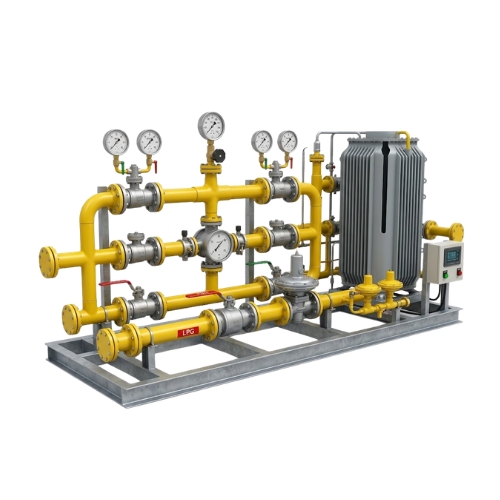
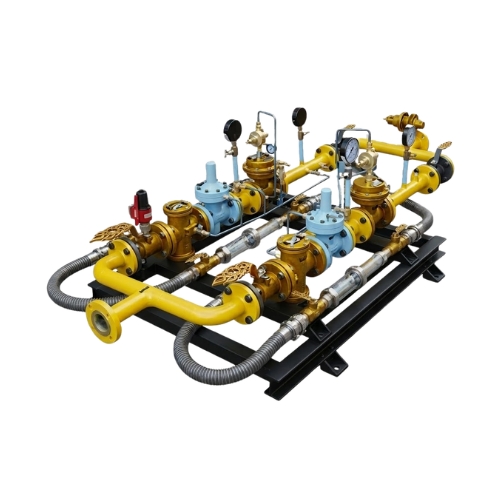
LPG Storage & Vaporization Systems provide a controlled way to store LPG, convert liquid LPG into vapour, regulate pressure, and deliver gas to industrial and commercial equipment. The right configuration may include LPG bullet storage tanks, vaporizer systems, VOT and LOT systems, cylinder manifolds, and pressure regulation and control equipment. As a service provider, we support LPG system installation, integration, testing, commissioning, and maintenance based on the customer's consumption, operating pressure, application, and site requirements.
What Is an LPG Storage & Vaporization System?
An LPG storage and vaporization arrangement is an integrated system used to store LPG, vaporize it when required, control its pressure, and distribute the gas safely to connected equipment.
The configuration depends on factors such as LPG consumption, peak gas demand, required operating pressure, storage capacity, available space, and the type of application.
A high-consumption industrial facility may require bulk LPG storage with a dedicated vaporizer, while a smaller installation may use multiple LPG cylinders connected through a manifold. VOT and LOT arrangements can also be selected according to the required LPG withdrawal method and gas demand.
A typical system can include:
- LPG storage tank or cylinder bank
- LPG vaporizer
- VOT or LOT arrangement
- Cylinder manifold
- Pressure regulators
- Isolation and control valves
- Safety devices
- Pressure and level instrumentation
- LPG gas piping and distribution network
How Does LPG Vaporization Work?
LPG is generally stored as a liquid under pressure. When LPG is required by the connected equipment, it needs to be supplied as vapour at the required pressure and flow rate.
For applications where the natural vaporization capacity of the storage arrangement is insufficient, an LPG vaporizer provides controlled heating to convert liquid LPG into vapour.
The basic process is:
LPG Storage → Liquid LPG Supply → Vaporizer → Pressure Regulation → Gas Distribution → End-Use Equipment
Vaporizer capacity should be selected according to the required LPG flow, peak consumption, operating conditions, and system design rather than average consumption alone.
This is particularly important for industrial facilities where gas demand can increase significantly during peak production.
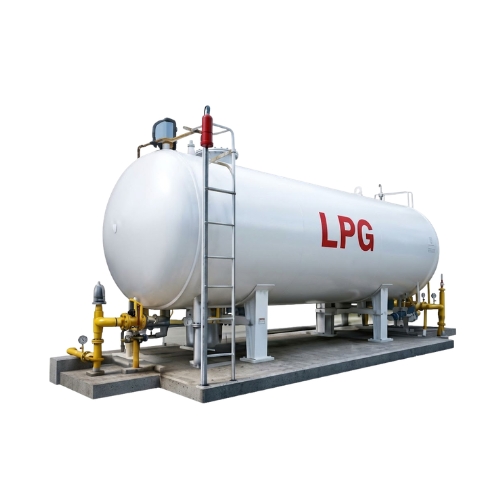
LPG Bullet Storage Tanks for Bulk LPG Applications
LPG bullet storage tanks are used for bulk storage where a facility requires a larger and more centralized LPG supply.
The tank works as the primary LPG storage point, with liquid LPG supplied to downstream equipment such as vaporizers. A complete installation can include valves, pressure-relief arrangements, level monitoring, piping, instrumentation, and other safety provisions.
When planning storage capacity, important considerations include:
- Average LPG consumption
- Peak LPG demand
- Required storage autonomy
- Tank filling requirements
- Vaporizer capacity
- Available installation area
- Future production expansion
- Applicable safety and statutory requirements
The storage tank should therefore be selected as part of the complete LPG supply system, rather than as an isolated piece of equipment.
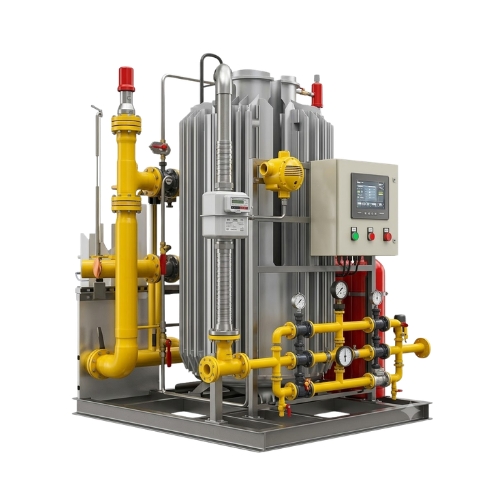
LPG Vaporizer Systems for Continuous Gas Demand
An LPG vaporizer system converts liquid LPG into vapour at the required rate when natural vaporization from the storage arrangement cannot meet demand.
Depending on the project, vaporization systems can use different heating arrangements. Selection depends on required capacity, operating pressure, available utilities, site conditions, and safety requirements.
Before selecting a vaporizer, consider:
- Maximum LPG consumption
- Peak-hour demand
- Required vaporization capacity
- LPG inlet and gas outlet conditions
- Heating method
- Operating pressure
- Future capacity requirements
Correct sizing helps maintain a consistent LPG supply when production or process demand increases.
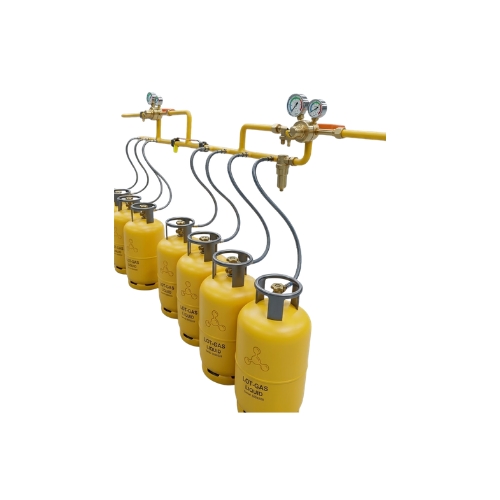
VOT System for LPG Cylinder Gas Supply
A Vapor Off-Take (VOT) system withdraws LPG in vapour form from connected cylinders through a manifold arrangement.
Multiple cylinders can be connected to a common system so that LPG can be supplied to downstream equipment through a controlled gas distribution arrangement.
A VOT installation may include cylinder connections, manifold headers, isolation valves, pressure regulation, changeover arrangements, and safety devices.
This configuration can be considered for applications where LPG is supplied through cylinders and the required gas withdrawal can be achieved through vapour off-take.
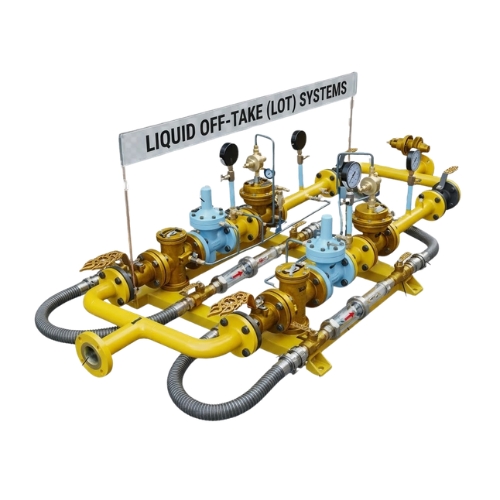
LOT System for Higher LPG Withdrawal Requirements
A Liquid Off-Take (LOT) system withdraws LPG from cylinders in liquid form. Since downstream equipment generally requires LPG in vapour form, the liquid supply is connected to a vaporizer for conversion into gas.
The main difference is therefore:
| VOT | LOT |
|---|---|
| Withdraws LPG vapour | Withdraws liquid LPG |
| Gas is supplied from cylinder vapour space | Liquid LPG is supplied to vaporizer |
| Suitable according to vapour withdrawal requirements | Can support higher withdrawal requirements with appropriate vaporization |
| Does not use liquid withdrawal as the primary off-take | Requires vaporization before gas distribution |
The selection between VOT and LOT should be based on gas consumption, peak demand, cylinder configuration, vaporization requirements, and the overall system design.
LPG Cylinder Manifold Systems for Centralized Supply
An LPG cylinder manifold system connects multiple cylinders to a common header and provides a centralized LPG supply to downstream equipment.
A properly designed manifold can make cylinder-bank management, isolation, changeover, pressure control, and distribution more organized.
Depending on the application, it can include:
- Cylinder connection assemblies
- Manifold headers
- Isolation valves
- Changeover arrangements
- Pressure regulators
- Pressure gauges
- Safety devices
- Flexible connections
- LPG distribution piping
The manifold configuration should be designed according to the number of cylinders, LPG consumption, required pressure, and applicable installation requirements.
Pressure Regulation & Control for Stable LPG Supply
Pressure regulation is an important part of an LPG distribution system because storage and cylinder pressure may not match the pressure required by downstream equipment.
A pressure regulation and control system can include regulators, isolation valves, pressure gauges or transmitters, safety shut-off arrangements, relief devices, and other control components as required.
The objective is to maintain controlled downstream pressure while responding to changes in LPG demand.
Problems such as pressure fluctuation, low gas pressure, or inadequate flow can occur because of incorrect regulator selection, insufficient capacity, inappropriate settings, or restrictions in the downstream system. Proper system engineering, installation, and commissioning can help identify and address these issues.
Where Are LPG Storage & Vaporization Systems Used?
These systems can support LPG requirements across various industrial and commercial applications, including:
- Manufacturing plants
- Chemical industries
- Food processing facilities
- Pharmaceutical plants
- Textile industries
- Hotels and hospitality facilities
- Commercial kitchens
- Process heating systems
- Industrial heating applications
- Fuel-gas and utility systems
The configuration should be matched to the application's actual LPG consumption and operating requirements.
How to Select the Right LPG System?
Before choosing storage, vaporization, or cylinder-based equipment, evaluate the complete LPG requirement.
The most important inputs include daily and hourly LPG consumption, peak gas demand, required pressure, storage requirement, vaporizer capacity, supply method, site conditions, available space, future expansion, and applicable safety requirements.
For example, a facility with high peak demand may require additional vaporization capacity even if its average LPG consumption is relatively moderate.
Providing accurate consumption and pressure information to the service provider can make system selection and project planning more effective.
LPG Storage & Vaporization System Installation Services
We provide services for LPG bullet storage tanks, LPG vaporizer systems, VOT systems, LOT systems, LPG cylinder manifold systems, and pressure regulation and control systems.
Our services can cover:
- LPG system planning and configuration
- Storage tank system installation
- LPG vaporizer installation
- VOT and LOT system installation
- Cylinder manifold installation
- Pressure regulation and control installation
- LPG piping and system integration
- Testing and commissioning
- Troubleshooting and maintenance support
The service requirement can be planned according to the facility's LPG consumption, equipment configuration, operating pressure, and application.
Need an LPG Storage or Vaporization System for Your Facility?
If you are planning a new LPG installation, capacity expansion, vaporizer upgrade, cylinder manifold system, or pressure-control arrangement, share your LPG consumption, required operating pressure, application, and existing system details with our team.
We can evaluate the requirement and help determine a suitable system configuration for your facility.
Contact us to discuss your LPG storage, vaporization, manifold, or pressure regulation requirement and plan the next stage of your project.